CategoriesBookkeeping

Understanding Outstanding Checks: Definition, Reasons, Consequences, And Resolving Process

outstanding checks definition

At Eisen, we are committed to simplifying the escheatment process for financial institutions. Our Escheatment Hub automates key aspects of managing outstanding checks, ensuring effortless and reliable compliance. Here are some of the features that make Eisen an invaluable partner in your compliance efforts. Companies must reflect these liabilities in their financial statements to provide a fair view of their financial health and maintain compliance, avoiding potential penalties. Outstanding checks need to be subtracted from the bank statement balance during the bank reconciliation process to adjust for the actual available balance correctly.

Fundamentals of Outstanding Checks: Financial Accounting Basics Quiz

outstanding checks definition

Before diving in any further, if this is your first time visiting outstanding checks definition GlobalBanks, don’t forget to download your FREE US Banking Starter Guide. It’s designed to help non-residents with opening bank accounts at top financial institutions in the US. This process is part of the accounting cycle, allowing the company to accurately report cash, a current asset, on its balance sheet. If you wrote a check and it has been outstanding for a while, you may be wondering, “Do checks expire? ” They do expire and that’s why it’s important to record the date you wrote the check.

outstanding checks definition

Ways to Avoid and Manage Outstanding Checks

outstanding checks definition

The check register includes details such as the check number, date of issuance, payee, and the amount of the check. By maintaining an organized and up-to-date check register, companies can easily identify outstanding checks and reconcile https://brianscottcraig.com/31-best-sites-for-remote-bookkeeping-jobs/ them with the bank statement. Outstanding checks are typically identified as part of the bank account reconciliation process. This is why your bank accounts need to be reconciled with the bank statement.

What are the risks associated with outstanding checks?

This transparency, mandated by GAAP and IFRS, is crucial for reflecting a company’s true financial health. The term outstanding checks refers to those checks that have been recorded by a company as being written, but not yet cleared and posted to the account’s statement by the company’s bank. On the payor side, it creates the need to carefully track uncashed checks so that money doesn’t get spent on other things. However, if your budget is handled appropriately and all checks are marked as pending, you’ll know not to spend that money. It is imperative for an issuer to provide payees with timely communication regarding the issuance of a check as well as any pertinent details as soon as possible.

Additionally, if adjusting entries a check is not returned to the bank after payment, it is also categorized as an outstanding check. Outstanding checks can create an illusion of liquidity by inflating the cash balance reported in bank statements. This misrepresentation can lead to poor financial decisions, such as overcommitting resources, which may strain cash reserves when the checks are eventually cashed.

  • Understanding their implications is crucial for businesses and individuals to maintain accurate financial records.
  • Overall, understanding the concept of outstanding checks is crucial for accurate financial reporting and cash management.
  • Put the date of the check, the amount, the payor, and the check number in your ledger that came with the checkbook.
  • Like business checks, personal checks are generally considered invalid after six months (180 days).
CategoriesBookkeeping

How to Calculate the Dividend Payout Ratio From an Income Statement

And also how much the company is reinvesting into itself, which we call “retained earnings.” To calculate the dividend payout ratio, the formula divides the dividend amount distributed in the period by the net income in the same period. Oil and gas companies are traditionally some of the strongest dividend payers, and Chevron is no exception.

  • The dividend payout ratio shows you how much of a company’s net income is paid out via dividends.
  • On the other hand, some investors may want to see a company with a lower ratio, indicating the company is growing and reinvesting in its business.
  • In this example, we need to calculate the dividend payout ratio where we don’t know exactly how much dividend is given.
  • Hence, public companies are typically very reluctant to adjust their dividend policy, which is one reason behind the increased prevalence of share buybacks.
  • But if you want to know the “per share” basis, here’s what you should do.

Option 2: DPR = DPS ÷ EPS

dividend payout formula

While many investors are focused on the dividend yield, a high yield might not necessarily be a good thing. If a company is paying out the majority, or over 100%, of its earnings via dividends, then that dividend yield might not be sustainable. A growth investor interested in a company’s expansion prospects is more likely to look at the retention ratio, while an income investor more focused on analyzing dividends tends to use the dividend payout ratio. To summarize, the 25% payout ratio indicates that 25% of the company’s net income is issued to equity shareholders, whereas 75% of the net earnings are kept each period (and rolled over and accumulated into the next period). A long-time popular stock for dividend investors, it slashed its dividends on February 4, 2022, in order to reinvest more cash into the business following its spin-off of WarnerMedia.

Dividend Payout Ratio vs. Retention Ratio

First, they decide how much they will reinvest into the company to grow bigger, and the business can multiply the shareholders’ money instead of just sharing it. It may vary depending on the situation but overall a good payout ratio on dividends is considered to be anywhere from 30% to 50%. Instead, such investors seek to profit from share price appreciation, which is largely a function of revenue growth and margin expansion, among many important factors. As a side calculation, we’ll also calculate the retention ratio, which is the retained earnings balance divided by net income. For this reason, investors focused on growth stocks may prefer a lower payout ratio. However, generally speaking, the dividend payout ratio has the following uses.

Discover dividend withholding tax rates by country and how to claim a foreign dividend tax credit to maximize your income. Actually, share stocks with the highest yields can often be in a distressed financial condition. Generally, more mature and stable companies tend to have a higher ratio than newer start up companies. But one concern regarding the introduction of corporate dividend issuance programs is that once implemented, dividends are rarely reduced (or discontinued). We’ll now move to a modeling exercise, which you can access by filling out the form below.

Note that there may be slight differences compared to the first formula’s calculation due to rounding and/or the exclusion of preferred shares, as only common shares are accounted for. This makes it easier to see how much return per dollar invested the shareholder receives through dividends. Dividend payouts vary widely by industry, and like most ratios, they are most useful to compare within a given industry. Learn how much money you need, how to get started, and common pitfalls to avoid.

Earnings per share are diluted in the formula because this is the most conservative view point. Below is the list of Oil & Gas Exploration & Production companies that are facing a similar situation. There are different ways of calculating this ratio and according to the applicability, the formulas are different too. Shaun Conrad is a Certified Public Accountant and CPA exam expert with a passion for teaching.

Good DPR: Market implications

Another portion that the company keeps for reinvesting into the company’s expansion is called retained earnings. And when we Calculate the percentage of retained earnings out of net income, we would get a retention ratio. Both the total dividends and the net income of the company will be reported on the financial statements.

What is the formula of dividend payout ratio?

Obviously, this calculation requires a little more work because you must figure out the earnings per share as well as divide the dividends by each outstanding share. Conversely, some companies want to spur investors’ interest so much that they are willing to pay out unreasonably high dividend percentages. Inventors can see that these dividend rates can’t be sustained very long because the company will eventually need money for its operations. Calculating the retention ratio is simple, by subtracting the dividend payout ratio from the number one.

  • Just deduct the retained earnings from the net income and divide the figure by net income.
  • A long-time popular stock for dividend investors, it slashed its dividends on February 4, 2022, in order to reinvest more cash into the business following its spin-off of WarnerMedia.
  • Companies in older, established, steady sectors with stable cash flows will likely have higher dividend payout ratios than those in younger, volatile, fast-growing sectors.
  • Depending on where the company stands in the level of maturity as a business, we would interpret it.

Dividend Payout Ratio Vs Dividend Yield Ratio

Sometimes, companies will also simplify things and list the per-share inputs needed on their income statements or key financial highlights. There are three formulas you can use to calculate the dividend payout ratio. Not paying one can be an extremely negative signal about where the company is headed. Investors react badly to companies paying lower-than-expected dividends, which is why share prices fall when dividends are cut.

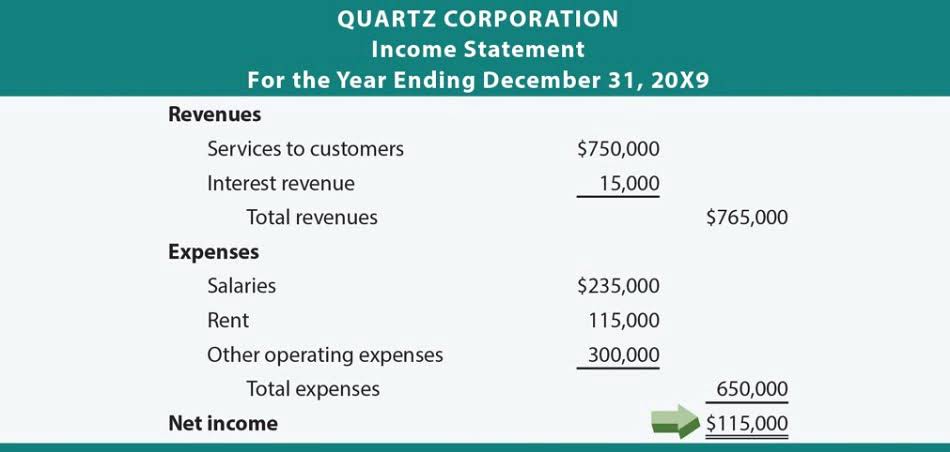
The figures for net income, EPS, and diluted EPS are all found at the bottom of a company’s income statement. For the amount of dividends paid, look at the company’s dividend announcement or its balance sheet, which shows outstanding shares and retained earnings. Simply put, the dividend payout ratio is the percentage of a company’s earnings that are issued to compensate shareholders in the form of dividends. Often referred to as the “payout ratio”, the dividend payout ratio is a metric used to measure the total amount of dividends paid to shareholders in relation to a company’s net earnings.

Cyclical Industries

If applicable, throughout turbotax support contact us page 2020 earnings calls and within financial reports, public companies often suggest or explicitly disclose their plans for upcoming dividend issuances. For the entire forecast – from Year 1 to Year 4 – the payout ratio assumption of 25% will be extended across each year. In our example, the payout ratio as calculated under this 3rd approach is once again 20%. For instance, insurance company MetLife (MET) has a payout ratio of 72.3%, while tech company Apple (AAPL) has a payout ratio of 14.6%. In other words, it (literally) pays off for a company to hold on some cash.

Just deduct the retained earnings from the net income and divide the figure by net income. To practically apply this ratio, you need to go to the company’s income statement, look at the “net income,” and find out if there are any “dividend payments.” However, as an investor, one needs to have a holistic view of the company instead of judging the company based on the dividend payout ratio. Because they believed that if they reinvested the earnings, they would be able to generate better returns for the investors, which they eventually did.

Since higher dividends are often a sign that a company has moved past its initial growth stage, a higher payout ratio means share prices are unlikely to appreciate rapidly. The dividend payout ratio is just one piece of the puzzle when it comes to assessing the performance of a company and its shares. In any case, investors expect a timely announcement and clear explanation of any changes in dividend policy, especially when dividend cuts are concerned. One of the key reasons is that dividend-paying stocks are an important fixed-income component of many individual and institutional investment portfolios. Similarly, companies paying higher dividends tend to be in well-established mature industries with stable earnings and little room for additional growth, where paying higher dividends may be the best use of profits.

CategoriesBookkeeping

Undergraduate Certificate in Business Management HE20543V01

small business bookkeeping

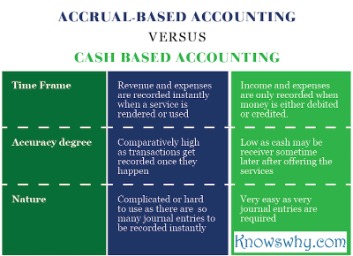
When you account for deferred expenses, your bookkeeping will reflect the month you actually enjoy the benefit of the expense rather than the month in which you paid it. As illustrated above, between the two basic methods of accounting (cash or accrual), you can best account for prepaid expenses using the accrual method. As a business owner, you’ll most likely have to create a complete financial report at least once a year, for tax purposes. However, there are plenty of reasons to make quarterly, or monthly financial statements as well. Frequent financial reports are a great way to check on your budget, and figure out where you can make adjustments if necessary. If you run a start-up you can save time by recording all transactions as they come up.

Bookkeeping Checklist for Small Businesses

With the right tools, you can feel confident managing financial transactions and helping your business grow. Continue reading to discover why small business accounting is important, as well as how to streamline your business’s finances. For instance, ever looked at your bank statements and thought, Where is all the money we made this month? For example, you may find yourself in a dispute with a vendor or under audit by the government.

Understanding taxes and deductions

As a business owner, bookkeeping might not rank high on your list of priorities. However, maintaining accurate financial records is key to your business’s success. If you have mistakes to fix or transactions to track down, don’t stress. Most of the time, a qualified professional http://dobradmin.ru/nacionalnyj-it-festival can correct or document these errors. Even if you aren’t planning on growing any time soon, you need to have a sense of how much money is coming in versus what is going out. As a business owner, it is important to understand your company’s financial health.

small business bookkeeping

A closer look at our picks for the top bookkeeping services

  • These days, you’ve got three options when it comes to bookkeeping tools.
  • Making sure your records are well-organized can save you a big headache if you’re ever subjected to an audit.
  • For both sales and purchases, it’s vital to have detailed, complete records of all transactions.
  • After some of your finished items have sold, you can track the cost of goods sold by including all direct costs.

Saving your records in the cloud also ensures that they’re easily accessible in a digital format from any device. Making sure your records are well-organized can save you a big headache if you’re ever subjected to an audit. If you’re months or years behind, you might want http://gamva.ru/mikki-maus/ to get a bookkeeper to do some catch-up bookkeeping for you (Bench can help with that). The more information (and supporting documents) you can give your CPA at tax time, the more deductions you’ll be able to legitimately claim, and the bigger your tax return will be.

small business bookkeeping

Recording just the cost of those supplies with the cash method might give you an inaccurate picture of how much you are — or should be — spending on supplies. So, which of these methods should you use in your bookkeeping to get the best, most accurate picture of your spending habits? Most small businesses will either do their books themselves or outsource the work to a professional. But even if an expense is ordinary and necessary, you may still not be able to deduct all of it on your taxes. Just because you do most of your work from your dining room table doesn’t mean that you can deduct your entire monthly rent. Luckily, the IRS has put together a comprehensive guide on business deductions that you can consult if you’re ever unsure about a deduction.

  • It’s a key component of the accounting process and can be done as frequently as daily, weekly or monthly.
  • In our ice cream shop example, some accounts in your ledger might be “revenue-ice cream sales”, “expenses-ice cream ingredients”, etc.
  • The more information (and supporting documents) you can give your CPA at tax time, the more deductions you’ll be able to legitimately claim, and the bigger your tax return will be.
  • There’s good news for business owners who want to simplify doing their books.
  • Small-business bookkeeping is the process of accurately recording your business’s financial activity.

Accounting software makes it possible to do much of this on your own, though you may decide to outsource some basic bookkeeping tasks to an online bookkeeping service as your small business grows. If your small business uses accounting software, it will help track when invoices are due. Most software programs provide options for automatic bill-paying and bank transfers.

The first seven steps of a bookkeeping process

small business bookkeeping

You check your financial records and find that business has been slower this year, and your estimated net taxes owed will only be $2,900 this year. In this case, you can still pay your taxes as a lump sum at the end of the year. However, if your business was steady this year and you once again owe over $3,000, you’ll need to start paying by quarterly instalments.

Quarterly bookkeeping tasks

You ordered the parts in January, and the manufacturer sent you an invoice that same month. However, you don’t actually pay the fee until you’ve received http://www.chelnews.com/news/finansy_ossiya_i_mir/4878-manimen-nachal-vydavat-mikrozaymy-na-yandeksdengi.html the parts, in February. Take the time to organize your records, whether that means buying a filing cabinet or breaking out the label maker.

CategoriesBookkeeping

Journal Entries for Dividends Declaration and Payment

They are often used when companies wish to reward shareholders without reducing cash reserves. By the time a company’s financial statements have been released, the dividend is already paid, and the decrease in retained earnings and cash are already recorded. In other words, investors will not see the liability account entries in the dividend payable account.

Dividends payable liability on balance sheet

The dividend payout ratio, which measures the proportion of earnings distributed as dividends, provides insights into the company’s earnings retention and distribution strategy. A high payout ratio might suggest limited reinvestment in growth opportunities, while a low ratio could indicate a focus on internal growth. Similarly, ROE, which measures the return generated on shareholders’ equity, can be affected by dividend payments.

Cash Dividends vs Stock Dividends

  • The corresponding credit to dividends payable signifies the company’s obligation to pay the declared dividends to its shareholders.
  • At the date of the board meeting, all these factors are considered, depending on which dividends are declared.
  • To record the payment of a dividend, you would need to debit the Dividends Payable account and credit the Cash account.
  • This entry effectively reduces the company’s cash balance, as the funds are transferred to the shareholders, and eliminates the liability that was previously recorded.
  • Since the cash dividends were distributed, the corporation must debit the dividends payable account by $50,000, with the corresponding entry consisting of the $50,000 credit to the cash account.

For example, in Canada, the dividend tax credit allows individuals to reduce their tax liability on dividends received from Canadian corporations. This credit is designed to account for the corporate taxes already paid on the distributed profits, thereby reducing the subject to change overall tax burden on shareholders. Such mechanisms can significantly influence investor behavior and the attractiveness of dividend-paying stocks. The tax implications of dividend payments are a significant consideration for both companies and shareholders.

Directly deduct retained earnings for dividends declared

  • It is credited when directors declare a cash dividend and debited when the cash for a previously declared dividend is paid to stockholders.
  • On the payment date, the company will need to settle the liability recorded earlier.
  • If each share is currently worth $20 on the market, the total value of the dividend would equal $200,000.
  • The company may want to invest all their retained earnings to support and continue that growth.
  • This liability is recorded in the company’s books, reflecting the company’s commitment to distribute earnings.

The process of recording these transactions is not merely a clerical task but an essential element of corporate accounting that ensures accuracy in financial reporting and compliance with regulatory standards. For example, if the company ABC in the example above does not have the dividend declared account, it can directly deduct the amount of dividend declared from the retained earnings account. There is no journal entry recorded; the company creates a list of the shareholders that will receive dividends. Dividend record date is the date that the company determines the ownership of stock with the shareholders’ record. However, sometimes the company does not have a dividend account such as dividends declared account. This is usually the case in which the company doesn’t want to bother keeping the general ledger of the current year dividends.

For cash dividends, the journal entry involves debiting Dividends Payable, removing the liability from the balance sheet, and crediting the Cash account, reflecting the cash outflow. Some companies choose not to pay dividends and instead reinvest all of their earnings back into the company. The company may want to invest all their retained earnings to support and continue that growth.

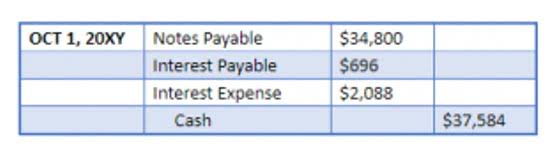
In many countries, qualified dividends are taxed at a lower rate compared to ordinary income, providing a tax advantage to investors. For instance, in the United States, qualified dividends are taxed at long-term capital gains rates, which are generally lower than ordinary income tax rates. However, not all dividends qualify for this lower rate, and investors must meet specific holding period requirements to benefit from the reduced tax rate. Two journal entries are related to dividends payable liability – one that is made at the time of declaration of dividends and one that is made at the time of payment of dividends. For example, on December 20, 2019, the board of directors of the company ABC declares to pay dividends of $0.50 per share on January 15, 2020, to the shareholders with the record date on December 31, 2019.

This liability is typically classified as current, as payment usually occurs within a year. Recording this liability ensures financial statements accurately reflect the company’s obligations. When a company decides to distribute dividends, the accounting process begins with the declaration of the dividend by the board of directors. This declaration creates a liability for the company, as it now owes the declared amount to its shareholders. The initial journal entry to record this liability involves debiting the Retained Earnings account and crediting the Dividends Payable account.

dividend paid journal entry

How do Stock Dividends impact the financial statements?

Upon the declaration of dividends by the board of directors, the company must make an entry in its journal to reflect the creation of a dividend payable liability. This entry involves debiting the retained earnings account and crediting the dividends payable account. Retained earnings are the cumulative net income less any dividends paid to shareholders over the life of the company. The debit to retained earnings represents the reduction in the company’s earnings as a result of the dividend declaration. The corresponding credit to dividends payable signifies the company’s obligation to pay the declared dividends to its shareholders. The journal entry does not affect the cash account at this stage, as the actual payment has not yet occurred.

Capitalization of Retained Earnings to Paid-Up Capital

Stock dividends (also called bonus shares) refer to issuance of shares of common stock by a company to its existing shareholders in the proportion of their shareholding without any receipt of cash. For example, on June 15, the company ABC, which is a corporation, has declared a total of $100,000 of cash dividend to be paid to its shareholders. This journal entry will reduce both total assets and total liabilities on the balance sheet by the same amount. The process involves specific journal entries that must be meticulously recorded to ensure accuracy in financial statements.

For example, say a company has 100,000 shares outstanding and wants to issue a 10% dividend in the form of stock. This is the date that dividend payments are prepared and sent to shareholders who owned shares on the date of record. The related journal entry is a fulfillment of the obligation established on the declaration date – 30th July; it reduces the Dividends Payable account (with a debit) and the Cash account (with a credit).

A general ledger account titled as “dividends payable account” is used to account for all declarations and payments of dividends to stockholders. Dividends payable account is a liability account and, therefore, normally has a credit balance. It is credited when directors declare a cash dividend and debited when the cash for a previously declared dividend is paid to stockholders. At the date the board of directors declares dividends, the company can make journal entry by debiting dividends declared account and crediting dividends payable account. However, after the dividend declaration but before actual payment, the company records a liability to shareholders in the dividends payable account. Alternatively, a company might issue a stock dividend, distributing additional shares of its own stock to current shareholders proportionally.

When a company declares a cash dividend, it commits to paying a specific amount of money to its shareholders. The accounting process begins with the declaration, where the company debits Retained Earnings and credits Dividends Payable. This entry reduces the retained earnings, reflecting the portion of profits allocated for distribution, and creates a liability. On the payment date, the company debits Dividends Payable and credits Cash, thereby settling the liability and reducing the cash balance. Accurate timing and recording of these entries are essential to ensure that financial statements reflect the company’s financial position and cash flows correctly.

To record the declaration of a dividend, you will need to make a journal entry that includes a debit to retained earnings and a credit to dividends payable. This entry is made at the time the dividend is declared by the company’s board of directors. The amount credited to the Dividends Payable account represents the company’s obligation to pay the dividend to shareholders.

How to Account for Prepaid Insurance? (Definition, Classification, Journal Entries, and Example)

She is a seasoned finance executive having held various positions both in public accounting and most recently as the Chief Financial Officer of a large manufacturing company based out of Michigan.

CategoriesBookkeeping

What is Accounts Receivable? The process, KPIs and metrics that matter

managed accounts receivable

Outsourcing can also bring in expertise that leads to a more efficient process and improved performance. Ultimately, the decision comes down to each business’s specific needs and circumstances. You can make things easy by providing multiple payment options, such as credit cards and ACH payments. Flexibility increases the likelihood of receiving timely payments but also enhances customer satisfaction. With an artificial intelligence accounting assistant, like Intuit Assist, you can help automate accounting tasks such as invoicing, payment reminders, and payment collection.

Credit Management

Many collection issues stem from customer dissatisfaction with post-sales bonds payable support. As a member of the finance team, you should ensure that all sales-related documentation reaches the customers timely. Additionally, you can streamline the invoicing process with meticulous attention to detail.

Customers facing sales-related issues may not make timely payments as they try to resolve them. Centralizing documentation and ensuring essential information is sent to the customer along with the invoice can reduce or resolve disputes while streamlining payments. One way to better facilitate this is to ensure that all customers have a method to connect with your team, whether that’s by phone, email, chatbot, or another option. However, it can also help to have a sound and reasonable system for sending payment reminders and collection requests.

  1. Effective accounts receivable management involves managing and tracking outstanding customer invoices and ensuring timely payment collection.
  2. Rather, the advantage is that they are in direct contact with customers at critical collection touchpoints and this needs to be leveraged.
  3. Use integration software like Zapier to set up triggers to contact clients based on inputs into your records.
  4. Flexibility increases the likelihood of receiving timely payments but also enhances customer satisfaction.

The cash application process—a core tenet of accounts receivable management—is notoriously difficult, so most AR teams have a lot of room for improvement. Automating cash application through machine learning enables companies to match any payment type with an open receivable, capture and reconcile payment data, eliminate manual entry, and speed up cash flow. Credit cards, cash, and paper checks are no longer the only forms of customer payment.

Cash Application Cloud Best Practices Webinar

managed accounts receivable

Being irs says business meals are tax deductible proactive about collecting payments is a key part of accounts receivable management. Start by providing clear communication channels for customers to ask questions about invoices or payments. The company’s cash flow is directly impacted by changes in accounts receivable. As customers pay off their outstanding debts, the cash inflow increases, improving the company’s cash flow position. The cash flow statement captures this impact, linking the balance sheet and the income statement.

To record a journal entry for accounts receivable, you will typically make a debit entry to the AR account, increasing the asset account, and a credit entry to a revenue account, indicating the revenue earned. When the payment is received from the customer, you will debit the cash account (increasing cash) and credit the AR account (decreasing the receivable). Accounts receivable (AR) represents the money owed to a company by its clients for goods or services that have been provided but not yet paid for.

How the accounts receivable (A/R) process works

Intuit does not endorse or approve these products and services, or the opinions of these corporations or organizations or individuals. Intuit accepts no responsibility for the accuracy, legality, or content on these sites. This content is for information purposes only and should not be considered legal, accounting, or tax advice, or a substitute for obtaining such advice specific to your business. No assurance is given that the information is comprehensive in its coverage or that it is suitable in dealing with a customer’s particular situation. Intuit Inc. does not have any responsibility for updating or revising any information presented herein.

But businesses that sell big-ticket or bulk items might not get paid for months. To see how you’re doing, compare your turnover ratio to other businesses in your industry. For example, learn about contra asset account you buy $1,000 in paper from a supplier who sends you an invoice for the goods.

Rather, the advantage is that they are in direct contact with customers at critical collection touchpoints and this needs to be leveraged. If you use paper billing, you can still automate your communications to save time and streamline your process a little. Use integration software like Zapier to set up triggers to contact clients based on inputs into your records. For example, set up a form email to send to a client when you enter into a spreadsheet that you’ve received a payment. Clear communication is critical to an optimized collections process and good customer experience. Set and communicate clear expectations, especially around payment terms.

Eliminate bad debt and collections risk

Companies get paid faster when customers can have transparent access to their account, view invoice statuses, and easily make online payments. Organizations that still rely on manual invoicing techniques—and subsequently maintain poorer AR management processes—limit their cash flow and growth. Good accounts receivable management policies can increase cash flow, improve collection processes, and get your company paid faster. Accounts Receivable (AR or A/R), sometimes called “receivables,” is how companies ensure, receive and process customer payments. In general accounting, Accounts Receivable is the money owed to a business for goods and services delivered but not yet paid for, i.e. purchased by customers on credit.

CategoriesBookkeeping

Understanding payment reconciliations: step-by-step guide & best practices

payment reconciliation

The manual reconciliation process for these payments can be labour-intensive, increasing the likelihood of delays. Delays in processing these payments not only inconvenience recipients but can also strain relationships with suppliers and impact the business’s reputation. Moreover, errors in mass payments can lead to overpayments or underpayments, creating further complications. https://www.bookstime.com/ Even though this is one of the key reasons for performing payment reconciliations in the first place, it can also be a problem when completing the process.

How Does Payment Reconciliation Process Work?

payment reconciliation

Once all discrepancies are payment reconciliation resolved, the ending balance in the accounting system should match the ending balance on the bank statement (or other relevant external record). Document the reconciliation process, including any adjustments made and explanations for discrepancies. Reconciling payment data can be a tedious and time-consuming process when completed by hand.

Human error

payment reconciliation

For example, if reconciliation errors persist in specific areas, such as digital wallet transactions, implementing additional automation or revising policies may be required. One of the fundamental steps in ensuring smooth payment reconciliation is to establish clear and transparent policies. These policies serve as the backbone of the reconciliation process, providing a standardised framework that all can follow. By adhering to defined procedures, businesses add authority to the entire reconciliation process, reducing the likelihood of errors and discrepancies. Clear policies also help in training new employees and ensuring that everyone understands their roles and responsibilities in the reconciliation process.

payment reconciliation

Step 3: Identifying Discrepancies

  • Regardless of your business type or industry, Payneteasy can provide you with the payment solution that will fit your specific needs.
  • Download our data sheet to learn how you can prepare, validate and submit regulatory returns 10x faster with automation.
  • Payment reconciliation is an integral process for every business that accepts payments for goods and services.
  • The result may be delays in payment date for mass payments made to suppliers and payouts to independent contractors like freelancers, publishers, and affiliates.
  • In single-entry bookkeeping, every transaction is recorded just once rather than twice, as in double-entry bookkeeping, as either income or an expense.
  • Instead, employees can direct their efforts toward resolving more significant discrepancies that have a more substantial impact on financial accuracy.
  • Payment reconciliation provides benefits whether performed separately for each bank account and payment method or automated for all payment methods in a mass global batch payment run using a payment reconciliation system.

The next step for each identified discrepancy is investigating and resolving the issue. This may involve reviewing original documentation, contacting vendors, customers, or financial institutions for clarification, correcting data entry errors, or adjusting the accounting records. Ongoing reconciliation promptly identifies errors and potential fraud, preventing these issues from snowballing into more significant problems. Frequent reconciliation increases the likelihood of closing financial books on time, ensuring that financial reports are always up to date.

One way to accomplish this is by working with a provider that maintains their own suite of solutions and unearned revenue tools according to cutting-edge technological standards. See how forward-thinking finance teams are future-proofing their organizations through AP automation. Automation promptly highlights outstanding invoices, enabling businesses to take timely action and avoid late fees or missed payments.

  • For instance, if a business invoices a client for Rs 1,00,000 payment reconciliation ensures that the corresponding Rs 1,00,000 payment is recorded correctly in both the company’s books and the bank’s records.
  • Payment reconciliation may be a behind-the-scenes activity, but it plays a front-and-center role in determining business success.
  • In the long term, these financial blind spots can erode profit margins, damage business relationships, and limit growth opportunities.
  • Additionally, manual processes require much more time and energy to maintain as AP teams must navigate multiple platforms to track invoice payments and bills.
  • At the same time, an automated reconciling tool provides a clear view of all the company’s transactions and closing balances.
  • Automation can easily accommodate this growth, ensuring that reconciliation remains efficient and effective.

Best Practices for Payment Reconciliation

payment reconciliation

A great starting point is to learn about which processes can be automated and how to efficiently streamline tasks–you can find everything you need in our AP Survival Guide downloadable eBook. Barbara is a financial writer for Tipalti and other successful B2B businesses, including SaaS and financial companies. She is a former CFO for fast-growing tech companies with Deloitte audit experience. When she’s not writing, Barbara likes to research public companies and play Pickleball, Texas Hold ‘em poker, bridge, and Mah Jongg. With the seeming simplicity of reconciliations, they can pose some challenges for business owners.

CategoriesBookkeeping

How to Audit Accounts Payable Ace Your Next AP Audit

how to audit accounts payable

Some audits may cover unique, less-predictable areas than those found in Sarbanes-Oxley Act (SOX) or compliance-focused audits. Simply expanding the scope of an audit is no longer enough as the approach will also need to be modified with each one. A traditional accounts payable audit can be a daunting task for organizations as they accounts payable audit are often a stressful and resource-intensive process.

how to audit accounts payable

Automate your AP and simplify AP audits with BILL

how to audit accounts payable

This keeps your cash flow stable and ensures critical operations continue CARES Act smoothly. Paying them late can harm trust and even disrupt your supply chain. You can record payment due dates and schedule payments on time with proper accounts payable bookkeeping. This keeps vendors happy and can lead to better terms, like discounts or extended credit.

What Is Accounts Payable Ledger: Everything You Need to Know

  • This includes data and an evaluation of the company’s AP practices.
  • When an auditor is looking at whether a business has followed general accounting principles and procedures, they’re looking at compliance.
  • The goal is to collect this money as fast as possible, so you can free up cash flow for use in the business.
  • An electronic invoicing system is one of the quickest and most effective ways to deal with fraud because there is much less room for human error.

This may be due to an intentional act of account manipulation or fraud tends to make accounts payable understated rather than overstated. Optimizing these processes helps your business maintain a healthy cash flow so you have a steady stream of incoming cash to cover all day-to-day expenses. The role of the accounts payable team is to provide admin and financial support to your business and manage all invoices it receives.

What is an Accounts Payable Audit?

how to audit accounts payable

Choosing the right accounts payable solution in Canada for 2024 involves several important factors. Look for software that offers automated invoice processing to reduce manual entry and minimize errors. Automation law firm chart of accounts can save your team time and help ensure accuracy in managing payables. Errors such as wrong quantities, incorrect prices, or mistakes in the terms can slip through. These problems can lead to overpayments, vendor disputes, and unnecessary work to correct errors. They can also affect cash flow and impact the company’s financial health.

  • Accuracy checks ensure the numbers in the company’s financial records are correct.
  • Your business will receive notification of the audit, and a meeting will be scheduled to discuss standard operating procedures (SOPs).
  • When we perform accounts payable audit, we test the existence assertion to ensure that the accounts payable balance shown on the balance sheet really exists at the reporting date.
  • In terms of business structuring, the two functions need to be separated for internal control purposes and to reduce the risk of fraud, so you need to have a dedicated department/personnel for each.
  • First, it’s easy to increase net income by not recording period-end payables.

how to audit accounts payable

The team controls outgoing cash by deciding when to pay invoices—to capitalize on early payment discounts and avoid late fees, as well as how to pay (via check or electronically). Whether simple or complex, every approval is recorded accurately and added to your books. This systematic approach allows businesses to avoid missed payments, plan cash flow efficiently, and ensure vendor satisfaction. White-Rodgers was able to gain real-time visibility into every process stage by digitizing and automating their accounts payable workflow. Documents became accessible within seconds, greatly simplifying tax audits and resulting in a 100% reduction in client-side paper invoice processing.

CategoriesBookkeeping

Calculate Lease Payments 4

Calculate Your Rent

In this article, we’re going to walk through the process of calculating a lease payment using Excel, with a helping hand from ChatGPT. Whether you’re leasing a car or a piece of equipment, these steps will give you the confidence to manage your finances like a pro. By analyzing trends and patterns, AI tools can provide an additional layer of verification for your calculations. This step can be particularly useful if you’re dealing with multiple leases or complex agreements. Leasing agreements can vary widely in terms and conditions, including lease duration and interest rates.

How to Create a Merge Document in Word from Excel using AI

Discover what BMI really means, its limitations, and how to use BMI calculators effectively for health assessment. Track your health, weight, and fitness goals with smart tools like BMI, BMR, and more. Stay updated with expert tips, industry insights, and in-depth guides on finance, health, business, education, and more.

Retirement Calculator

  • Calculate and compare the true financial impact of leasing equipment versus making an outright purchase.
  • Understanding the total cost of leasing a vehicle is essential for budget planning.
  • Calculate loans, mortgages, interest rates, and savings to manage your personal and business finances.

Lease payment NPV calculations are essential for compliance with accounting standards like IFRS 16 and ASC 842. Excel provides a transparent, auditable platform for these important financial computations. Re-measurement also occurs with changes in residual value guarantees or lease modifications that alter original terms, such as a reduction in leased asset scope.

Calculate Lease Payments

Here’s a step-by-step guide to entering the formula and understanding the inputs required. Calculating lease payments is a crucial step for individuals and businesses who are considering leasing assets such as equipment or property. It allows them to determine the financial commitment required for the lease and plan their budget accordingly. In this Excel tutorial, we will provide a brief overview of the process to help you calculate lease payments accurately and efficiently. Leasing is a common practice for businesses of all sizes, offering flexibility and financial advantages. However, to accurately account for leases and comply with accounting standards like ASC 842, calculating the Present Value of Lease Payments (PV) is essential.

This setup makes it easy to see everything at a glance, like looking at a neatly arranged toolbox. These customizations can help you create a powerful tool that’s perfectly suited to your leasing needs. The Net Present Value of payments affects the Right of Use Asset Starting Balance, Total Ending Liability Starting Balance, and Interest for all schedules affecting the balance sheet. While Excel is a useful tool, it has limitations, and managing complex lease portfolios can be challenging.

The calculators our users love most – tried, tested, and trusted by millions of people worldwide. Perform advanced physics, chemistry, and engineering calculations for research and education. Our calculators work seamlessly on any device, offering a smooth and user-friendly experience for quick and reliable results.

Leverage Your Data with Excel Dashboards

Analyze how different lease payment schedules affect overall project budgets and cash flow. This insight allows project managers to select payment structures that align with their financial planning and available resources. Determine the actual present value cost of extended rental agreements to assess their true financial burden. This calculation enables businesses to understand the real cost of their rental commitments and compare different rental terms effectively. These expenses directly tied to securing the lease, such as commissions or legal fees, increase the overall cost of obtaining the right to use the asset.

How Much Weight Will I Lose With Gastric Sleeve Calculator: Set Realistic Goals Today

This process can be complex, especially for those new to financial modeling. In this particular example, the present value amount is relatively small. The difference between the two functions will be more significant when a more substantial sum is present valued. Regardless of this fact, from an auditor’s perspective, they will not raise an audit difference based on the present value function selected. Calculate your estimated commercial lease payments quickly and accurately with this simple tool.

Setting Up Your Excel Spreadsheet

Sometimes, though, a partial period is required in the calculation of NPV, for example when the payment is not at the beginning or end of the calendar month. That can be done with Excel, but this requires creating a complex model. Also, the payment methodology (beginning or end of period, see below) is important for making PV work with lease accounting schedules.

Is Leasing Right for You?

  • Discover what BMI really means, its limitations, and how to use BMI calculators effectively for health assessment.
  • A higher residual value typically results in lower monthly payments since you’re essentially borrowing against this future value.
  • This formula considers the depreciation of the item, the interest (money factor), and the sales tax to provide a rough estimate of your monthly payment.
  • Incorporating these costs ensures that the asset’s value reflects all necessary expenditures to bring the lease into effect.

For Lessees, auto lease calculators are crucial for budgeting and decision-making. Lessees can use these tools to determine if the lease payments align with their financial capacity, considering factors like down payments and monthly obligations. For those exploring a novated lease for Hyundai, these calculators can be especially useful in estimating tax benefits and overall affordability. Having a reliable leasing calculator at your disposal helps streamline your budgeting process. By understanding your monthly lease payment and any additional costs, you can budget more accurately, ensuring that your finances remain healthy while enjoying your new vehicle. Calculating lease payments in Excel can be a useful tool for both businesses and individuals looking to get a clear picture of their financial obligations.

A leasing calculator provides insights into structured payments and helps you identify how to negotiate terms effectively, ensuring you maximize the benefits of your lease. You are required to calculate monthly lease payments based on the given information. A Right-of-Use (ROU) asset represents a lessee’s right to use an underlying asset for a specified period, as defined by modern lease accounting standards. It ensures financial statements accurately reflect obligations and controlled assets, even if not owned. Recognizing ROU assets on the balance sheet provides a more transparent view of a company’s financial position regarding leased properties, equipment, or other assets.

A discount rate determines the present value of future lease payments, reflecting the time value of money. The preferred rate is the implicit interest rate, if readily determined. This rate Calculate Lease Payments represents what the lessee would pay to borrow funds over a similar term, collateralized by a similar asset, in a similar economic environment. Yes, Excel can help you analyze the affordability of different lease options by calculating total costs, monthly payments, and other financial metrics. By comparing lease options side by side in Excel, you can determine which option is most financially feasible. The calculator first converts the annual increase percentage to a decimal and applies this incrementally to the base rent for each month of the lease term.

CategoriesBookkeeping

Mega Millions Lottery Winning Numbers & Results

is mm million

Pennymac said that Cenlar posted $459 million in subservicing revenue in 2025. “They will become Pennymac employees and drive our subservicing business, because our subservicing business is about to get materially bigger,” he said. Concurrent with closing, Cenlar will surrender its bank charter. Pennymac will acquire Cenlar’s subservicing business as a nonbank entity focused exclusively on mortgage subservicing. It will methodically transition about 100 institutional clients while delivering enhanced levels of customer service to their borrowers.

What is the Mega Ball number?

is mm million

Abbreviating “hundred” as “H” would be strange, because it’s not an abbreviation you’re likely to find anywhere else. Scientific texts, on the other hand, avoid appellations like million, billion and trillion and instead use scientific notation when writing about very large and very small numbers. Scientific notation represents numbers in powers of ten, so that 650 billion can be written as 650 × 109 or is mm million as 6.5 × 10¹¹.

What is the abbreviation for 1 thousand dollars?

is mm million

I was told my rate would be $2M per year to deliver $1MM in protection. The cardinal number is automatically recognized when using M or MM in accounting. Even if you have a significant figure to represent, such as 12 billion, you could still write it as 1200MM, which would be understood. Wealthier individuals and households would reach to the millions. If you see “one quintillion,” you know that it’s a lot – and have spatial awareness of what it represents. The seven letters in Roman numerals are I, V, X, L, C, D, and M.

  • K is also used in computing to mean “kilobyte,” but mostly in commercial contexts as a shortening of KB (see CMOS 10.49).
  • If you’re confused about the letter designations that stand for thousands and millions, you’re not alone.
  • Understanding these nuances is essential for effective communication in finance and business environments.
  • While mega- (M) in SI units always represents 10⁶ (1,000,000), in computing, it is sometimes incorrectly used for binary numbers, where a “megabyte” might mean 1,048,576 bytes instead.
  • Cenlar’s subservicing business primarily consists of subservicing contracts and mortgage servicing operations.

more stack exchange communities

The same principle applies to millions and billions when dealing with financing and accounting terms. When two Ms are together (MM), it indicates 2,000 when using this methodology for expressing numbers. To avoid confusion, the term $1MM is often used to designate a million, while the generic “MM” represents 2,000. He is also an online editor and writer based out of Los Angeles, CA. Proofread your work thoroughly, focusing primarily on the use of abbreviations. Ensure that the context of the abbreviation is clear and that the abbreviation is suitable for that context.

is mm million

is mm million

Traditionally, M is used as the symbol for thousands and MM for millions in the business world, particularly in accounting. However, there has been a growing tendency to use K as the symbol for thousands instead of M. I have worked in equity markets for 20 years and poor abbreviations drive me crazy. Regretfully, until the USA goes metric there’s going to continue to be problem with this. I generally use $___MM, which https://www.logan.com.pe/2023/07/11/how-long-does-it-take-to-become-a-bookkeeper/ was, and still is, often used by accountants and economists. Before “k” was adopted as the colloquial way of writing a thousand (i.e. $35k to mean $35,000), it was common to use “M” instead; “M” being the Roman Numeral for 1,000.

is mm million

Changing the unit from mm to inches simply changes the numerical input value and the required unit conversion factors used during the volumetric calculation step. The dimensional analysis process is invariant regardless of the specific linear unit employed. As businesses operate on a global scale, the need for standardized financial terminology becomes paramount. If you had a commercial property valued at $92 million, a modern writer would likely abbreviate the expression by saying it was worth $92M. In accounting and financial analysis terms, we know that reads as 92 thousand dollars, but the context allows us to understand the expression’s intent.

  • They said it was $3MM and $12MM, respectively, so I knew they meant $3 million and $12 million.
  • Review a few examples of sentences that feature common abbreviations for billion.
  • So, now, after gathering all the knowledge about converting a number to millions or vice versa, let’s consider a practical example.
  • Servicing and subservicing drew renewed attention in March 2025 when Rocket Companies announced a $9.4 billion deal to acquire Mr. Cooper Group, the largest servicer in the country.
  • While the formula provides the mechanism, several real-world factors can significantly alter the resulting concentration.
  • For example, 1MM equals 1 million, $34MM equals $34 million and so on.

How do I know if I’ve won a Mega Millions play?

  • But Pennymac reported an owned servicing portfolio of $697.7 billion at the end of 2025, up about 5% year over year and good for No. 4 nationally.
  • This unit provides an absolute physical measurement of the water layer present, regardless of what chemical substances are dissolved within it.
  • While it is accepted in English today that one billion equals 109, it is important to be aware, especially when reading older texts, that in the United Kingdom billion hasn’t always meant 109.
  • Words such as a million, referring to numbers, are only abbreviated in circumstances where the reader is aware of the full meaning.
  • However, I often see where those who are dealing with financing (banks and investment houses for bonds) use the MM for millions of dollars.

You won’t typically see the power of 10 rule applied to financial documents today. Most financial sums are tracked in ones, tens, hundreds, thousands, and ten thousands. Once you get to a large sum, it makes sense to abbreviate it in common ways to help everyone understand the figure without overwhelming them. The Romans incorporated seven letters to represent different numbers for a standard counting method to simplify that situation. We also have a million to thousand converter, which can surely come in handy for millions conversions. It is the standard system on the Leopard 2 and M1 Abrams main battle tanks.

It specifically helps analysts understand how a specific volume of liquid (measured by depth, like rainfall or runoff) affects the concentration of dissolved solids or contaminants. No, the underlying engineering and chemical principles of the conversion do not change if inches are used instead of millimeters. The conversion fundamentally relies on linking a linear depth measurement to a mass ratio.

What does MM stand for in finance?

  • The term “MM” originates from the Roman numeral M, which stands for one thousand.
  • While the letter “k” is the most common abbreviation, there are a few different ways to abbreviate thousand.
  • The Greek option is typically capitalized when multiple abbreviations are used for accounting purposes.
  • In finance and accounting, MM (or lowercase “mm”) commonly denotes that the units of figures presented are in millions.
  • The conversion fundamentally relies on linking a linear depth measurement to a mass ratio.
  • To further muddy the waters, K can also mean “kelvin,” which is the base unit of temperature.

But since the ice’s surface area is so large, even a millimeter of meltwater can add up to a massive, fast-moving river. The resulting patch is about an inch wide, with an array of 121 clear microneedles, https://www.bookstime.com/ each just a fraction of a millimeter long and made from a mixture of silk, sugar, and other polymers. For example, millions of people got affected due to a downfall in the economy. I suspect influence of some language which is not Latin…In Spanish M would be an abbreviation of million, MM of millions.

A millimeter is a small unit of displacement (length/distance) in the metric system. Of Company is $15,000,000 shares of $ 100 each i.e. $ 1,500,000,000. The core of the mm to ppm calculation water treatment hinges on manipulating standard metric units to establish the required mass-to-volume ratio. The primary formulas link volume calculation (depth x area) with the concentration definition (mass/volume). K is also used in computing to mean “kilobyte,” but mostly in commercial contexts as a shortening of KB (see CMOS 10.49).

CategoriesBookkeeping

Nonprofit Accounting: A Guide to Basics and Best Practices

nonprofit accounting basics

Though many nonprofit organizations are classified as exempt from federal income tax, they still need to prepare tax forms at the end of the year. For instance, when a nonprofit holds a fundraiser, the money received needs nonprofit accounting basics to be tracked separately from other funds. So, if a nonprofit has five active programs for which it regularly obtains funding, it will need to track all income and expenses for each of those programs or funds separately.

  • Here’s a helpful guide for these organizations, especially when it comes to political activity and lobbying.
  • For instance, a nonprofit that is funded primarily through private donations needs to track funds much differently than a nonprofit that receives grants on a regular basis.
  • A qualified accountant will help your nonprofit stay ahead of the game by carrying out all of these activities and more.
  • To truly tackle and sustain the monetary health of nonprofits, staff, and team members need a strong understanding of the accounting principles that are unique to this industry.

While most undergraduate programs cover the basics of accounting, the practices of a nonprofit bring a new level of complexity to the art of numbers and reporting. Additionally, many banks offer business checking accounts specifically designed for nonprofits, often with waived fees or reduced transaction costs. These tailored accounts can provide valuable features, such as multiple signatories, online banking tools, and interest-bearing options, further supporting your nonprofit’s financial management needs.

Why not hang your website hat on us?”,”slug”:”et_pb_text”” data-et-multi-view-load-phone-hidden=”true”>

Their software also features a dashboard view that’s great for a bird’s-eye view of overall expenses, including overhead expenses. Like nonprofit organizations, government entities also use a type of fund accounting, usually referred to as encumbrance accounting, which budgets and reserves funds for specific expenditures. In addition to solid GAAP accounting skills, you’ll need an understanding that money coming into the organization is generally difficult to obtain, so it must be spent wisely. That means not only must you understand the nuances of nonprofit accounting vs. net-income-focused accounting, but you must be able to employ solid management accounting practices across the board. Nonprofit organizations must provide the state with a copy of the IRS Form 990 or an equivalent. For instance, States like Virginia and North Carolina accept audited financial statements.

  • Examples of these nonprofits include social organizations, chambers of commerce, college fraternities and sororities, amateur sports clubs, employee organizations, and more.
  • To make nonprofit accounting more efficient, organizations can leverage accounting software specifically designed for nonprofits.
  • Also, make sure your budget is approved by your board of directors when it’s written up.
  • The unfortunate truth is that many nonprofit leaders never receive the education or have the experience necessary to handle executive-level accounting.
  • Understanding these fundamentals is vital to maintaining transparency, accountability, and trust among the stakeholders they serve.
  • Not only does it centralize your expense data into one system (i.e. no more hunting through masses of unorganized receipts!), but it allows you to submit and track business expense data in real-time, on a 24/7 basis.
  • The other resource a nonprofit depends on is a quarterly balance sheet listing the owner’s equity.

This is due to the rules around reporting revenue and expenses for 501(c)(3) organizations. Revenue can come from services the organization provides, admission fees via theaters, art exhibits, museums, etc., fundraising or donations, and other areas. Your nonprofit’s statement of activities is also known as your income statement. Plus, you can use this document to review your change in net assets from the beginning of the year to the end of the year.

CPE Webinar: Mastering Budgeting: Build Budget Reporting for…

As with any financial statement, ensure that all figures are accurate and up to date before submission. The financial resources, needs, and expenses of nonprofit groups are often incredibly different from other businesses or organizations that exist based on ownership and profit. Using segments enables you to easily track the expenses against any temporarily restricted donation, allowing donors and foundations the ability to see exactly how their funds were used. For instance, a nonprofit organization may receive a donation in the amount of $5,000 that the donor states must be used to pay for a particular program before the end of the year. Grants are also considered temporarily restricted as they also have an expiration date.

Accounting 101 for Beginners – A Guide to Accounting Basics – Techopedia

Accounting 101 for Beginners – A Guide to Accounting Basics.

Posted: Tue, 05 Mar 2024 08:00:00 GMT [source]