The CI/CD pipeline performs continuous integration, delivery, and deployment in 4 phases—source, build, test, and deploy. Traditionally how to spam a website, deploying new software variations has been a large, complicated and dangerous task. After the brand new version was examined, the operations staff was tasked with deploying it into manufacturing.
CI/CD pipelines are formalized software growth workflows and tool sets supposed to supply a defined path for constructing, testing and delivering modern software program. Info safety practices had been applied at the end of the software improvement lifecycle (SDLC). Nevertheless, discovering safety breaches at the end of SDLC may be very frustrating and points found at that stage are difficult and costly to resolve.
Automated Testing
The demand for rapid software improvement and delivery has elevated the use of open supply third-party integrations. Some groups could bring third-party integrations into their deployments without properly scanning the source code for safety vulnerabilities. Developers may not observe code safety finest practices, growing the attack floor. Frequent code vulnerabilities embody person enter vulnerabilities, buffer overflows, error handling errors, and serialization points. This continuous testing presents quicker bug fixes, helps ensure functionality and, in the end, results in higher collaboration and software quality.
The CI system automatically runs checks to catch high quality issues, and builders get quick suggestions and may fix issues immediately. Builders often decide to the grasp department or work on a short-lived characteristic branch, and a function isn’t considered full till it is integrated with different code changes in the master department. Lastly, the modifications are deployed, and the final product is moved into production. In continuous delivery, products or code are sent to repositories and moved into manufacturing or deployment by human approval. For teams that may not must release updates as incessantly of their workflow—such as for those building healthcare applications—continuous supply is typically the preferred option.
This triggers a CI process, which pushes images to a Docker registry and commits image tags to a Git repository. This deployment mannequin is also called a pull-based deployment—the resolution displays Kubernetes resources and updates them primarily based on the configurations in the Git repo. It contrasts with push-based deployment, which requires the person to trigger events from an external service or system.
Ci Workflow
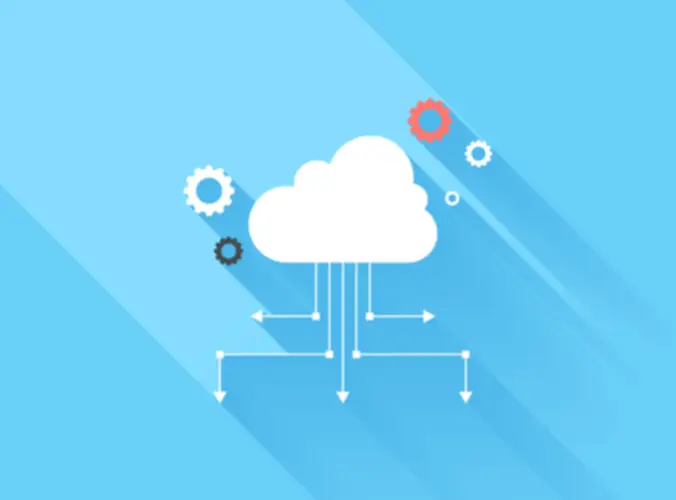
A pipeline is a course of that drives software program growth by way of a path of constructing, testing, and deploying code, also called CI/CD. By automating the method, the target is to reduce human error and preserve a constant process for the way software is launched. Instruments which are included in the pipeline may include compiling code, unit checks, code analysis, security, and binaries creation. For containerized environments, this pipeline would also embody packaging the code right into a container image to be deployed across a hybrid cloud.
- The CI/CD pipeline contains quite so much of on-premises and cloud-based assets used to build, take a look at and run code.
- Each continuous supply and continuous deployment take care of automating additional down the pipeline than CI and are often used interchangeably.
- This agility lets your group respond quickly to market adjustments and consumer suggestions.
If errors happen during the testing part, the method loops these outcomes again to builders for evaluation and remediation. Since builds endure many checks, builders employ automated testing to attenuate human error and improve productiveness. Shift-left testing involves integrating security testing and other crucial development practices earlier within the software growth lifecycle (SDLC). Shift-right testing includes testing later in growth, usually in manufacturing environments. These strategies complement each other by spreading testing accountability throughout the SDLC.
This contains automated unit exams, integration tests, and perhaps end-to-end testing. The staging surroundings simulates the manufacturing surroundings, allowing for final validation before manufacturing deployment. Deployment instruments like Ansible, Chef, Puppet, Kubernetes, or cloud-specific companies like AWS CodeDeploy. The codebase is compiled and constructed into a deployable artifact, corresponding to a binary executable or a Docker picture.

Supply management systems provide a historical past of code improvement and help to resolve conflicts when merging contributions from multiple sources. Launched in 2018, Argo CD is an open supply project that gives a steady deployment resolution for Kubernetes. Argo CD is Kubernetes-native, and makes use of a GitOps deployment model, with a Git repository as the one supply of truth for Kubernetes infrastructure states. GitOps is a paradigm that allows developers to operate in a full self-service environment, with out requiring assistance from IT staff. GitOps requires that developers create and monitor environments utilizing declarative configurations. These declarative configurations turn into the basis of the CI/CD course of and are used to create all environments—dev, test, and production.
CI/CD supplies a single repository for storing work and persistently automates integration and continuous testing. Keep reading to discover the answers and find out extra about the benefits of CI/CD pipelines for engineers and enterprises. With Steady Integration, developers incessantly commit to a shared widespread repository utilizing https://www.globalcloudteam.com/ a model management system such as Git.
By utilizing Pink Hat OpenShift, organizations can employ CI/CD to automate constructing, testing, and deployment of an application throughout a quantity of on-premises and cloud platforms. CI/CD tools may help a team automate their growth, deployment, and testing. Some tools particularly deal with the mixing (CI) facet, some handle improvement and deployment (CD), whereas others focus on steady testing or related how to use ai for ux design functions. CI/CD helps organizations keep away from bugs and code failures while sustaining a steady cycle of software program improvement and updates.